Ingenious Methods to Fillet Weld Examination and Screening: Enhancing Weld Top Quality and Compliance Criteria
In the world of welding, the quality and integrity of fillet welds play a crucial duty in making sure the structural soundness and integrity of different commercial components. With the continuous drive for boosted efficiency and compliance with rigorous criteria, the exploration of innovative techniques to fillet weld examination and screening has actually come to be essential. As industries advance, the traditional techniques may no more be enough in meeting the demands of modern-day welding applications (Gauge Fillet Weld). By accepting innovative technologies and approaches, a brand-new perspective of opportunities arises in the world of weld high quality assessment and adherence to conformity standards.
Advanced Non-Destructive Testing Approaches
Making use of advanced innovations, advanced non-destructive screening techniques play an essential duty in making sure the integrity and high quality of fillet welds. These methods, such as phased selection ultrasonic testing (PAUT) and magnetic bit testing (MPT), offer thorough understandings right into the weld's interior framework without creating any type of damages to the material. PAUT, for example, makes use of numerous ultrasonic aspects to check the weld from various angles, giving a detailed visualization of possible problems like lack of blend or fractures.
By using these advanced non-destructive screening methods, weld assessors can properly examine the high quality of fillet welds, making certain conformity with industry standards and laws. The capacity to spot flaws early on not only improves weld quality but also prevents expensive rework or failings in architectural honesty, highlighting the value of these ingenious testing strategies in welding examinations.
Robotics and Automation in Inspection

The assimilation of robotics and automation has revolutionized the inspection process for fillet welds, boosting performance and accuracy in quality analysis. Robotics provide exact control and repeatability in examining welds, making sure consistent and trusted outcomes. Automated systems can be configured to comply with specific inspection paths, guaranteeing detailed protection of welds and decreasing the risk of human mistake.
Robot inspection systems outfitted with sophisticated sensors can detect and measure weld features with high precision, offering thorough information for evaluation. These systems can recognize defects such as fractures, lack of fusion, and porosity, enabling prompt restorative activities to be taken. In addition, robotics and automation enable for real-time data collection and analysis, giving prompt responses to drivers and assisting in quick decision-making processes.
Moreover, the usage of robotics and automation in fillet weld assessment improves general efficiency by decreasing examination times and raising examination throughput. By enhancing the assessment process, makers can ensure weld top quality and conformity criteria are met efficiently, inevitably leading to cost savings and boosted item high quality.
Using Expert System for Evaluation
Artificial knowledge plays a pivotal function in improving the efficiency and accuracy of evaluation in fillet weld inspection processes. AI algorithms can rapidly refine huge amounts of information from weld examinations, finding flaws or incongruities that may be testing to identify with the nude eye.
Additionally, AI systems can gain from previous evaluation information, continuously improving their capacity to identify potential defects and deviations in fillet welds. This adaptive knowing ability improves the total quality control process, minimizing the possibility of human mistake and ensuring that welds fulfill the called for criteria. By incorporating synthetic knowledge right into fillet weld evaluation, markets can accomplish higher degrees of performance, uniformity, and conformity in their evaluation practices.
Portable Equipment for On-Site Assessment
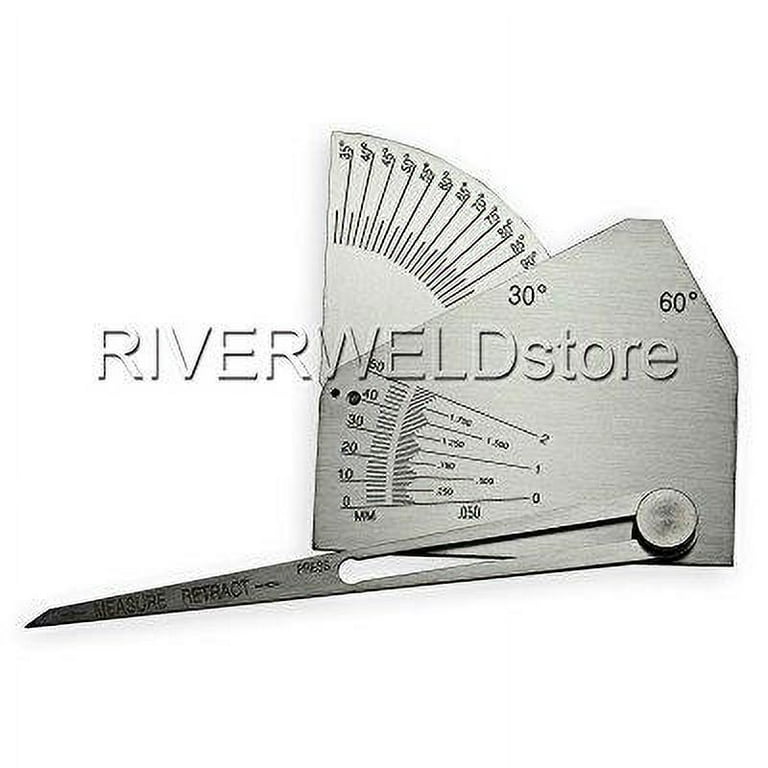
Enhancing field evaluation effectiveness, the adoption of portable devices changes on-site assessment procedures for fillet welds. These tools provide adaptability and comfort, allowing inspectors to perform detailed evaluations in different places, including difficult or remote settings. Portable devices such as ultrasonic testing tools, magnetic fragment inspection equipment, and electronic radiography systems helpful resources supply real-time information and high-resolution imaging capacities, allowing fast decision-making and prompt responses on weld quality.
One substantial advantage of portable tools is their capability to enhance inspection treatments, lowering downtime and enhancing total efficiency - Gauge Fillet Weld. Inspectors can conveniently transfer these tools to various job sites, removing the demand for transporting heavy machinery or elements to off-site centers. Additionally, the portability of these tools advertises cost-effectiveness by lessening transport expenditures and accelerating examination timelines
In addition, using portable tools for on-site evaluation promotes proactive high quality control procedures, as inspectors can immediately recognize and attend to any potential welding defects or inconsistencies. By including these ingenious modern technologies into on-site examination practices, welding experts can make certain compliance with see here now sector criteria and enhance weld top quality, ultimately resulting in enhanced structural integrity and safety in numerous welding applications.
Combination of Data Monitoring Equipment

Having maximized on-site examination procedures with the use of portable tools, the next phase includes the smooth combination of information monitoring systems to even more enhance effectiveness and information evaluation capacities in fillet weld assessment and testing. By integrating data management systems right into the inspection procedure, companies can simplify data collection, storage, and evaluation. This assimilation permits real-time monitoring of weld quality, immediate identification of defects, and timely decision-making to fix any kind of problems that may develop throughout the inspection process.
Data management systems play a critical function in streamlining examination information, promoting very easy gain access to for accredited personnel, and making certain data integrity and protection. With the integration of these systems, inspectors can generate extensive reports, track historic data for pattern analysis, and boost total process efficiency. Moreover, the assimilation of information management systems enables smooth interaction in between various stakeholders included in the examination procedure, fostering cooperation and improving general high quality control steps. Inevitably, the integration of data management systems serves to boost the requirements of fillet weld examination and testing, ensuring compliance with sector policies and improving weld quality.
Final Thought
In verdict, cutting-edge approaches to fillet weld inspection and screening have considerably enhanced weld top quality and compliance criteria. Advanced non-destructive testing approaches, robotics, automation, fabricated knowledge, mobile tools, and data More Help administration systems have revolutionized the way weld evaluations are carried out. By using these modern technologies, industries can make certain that welds fulfill the required quality criteria and guidelines, inevitably boosting total efficiency and safety and security in welding procedures.
Having actually enhanced on-site assessment procedures via the usage of mobile devices, the following phase involves the smooth assimilation of data management systems to better boost performance and data evaluation capacities in fillet weld inspection and screening. Ultimately, the assimilation of data monitoring systems offers to raise the criteria of fillet weld assessment and testing, making certain compliance with market laws and boosting weld quality.
